
Sep 28, 2026
- [Connect Lovable apps to the live web with Parallel](https://parallel.ai/blog/lovable-parallel)
Author: By Parallel
July 21, 2026
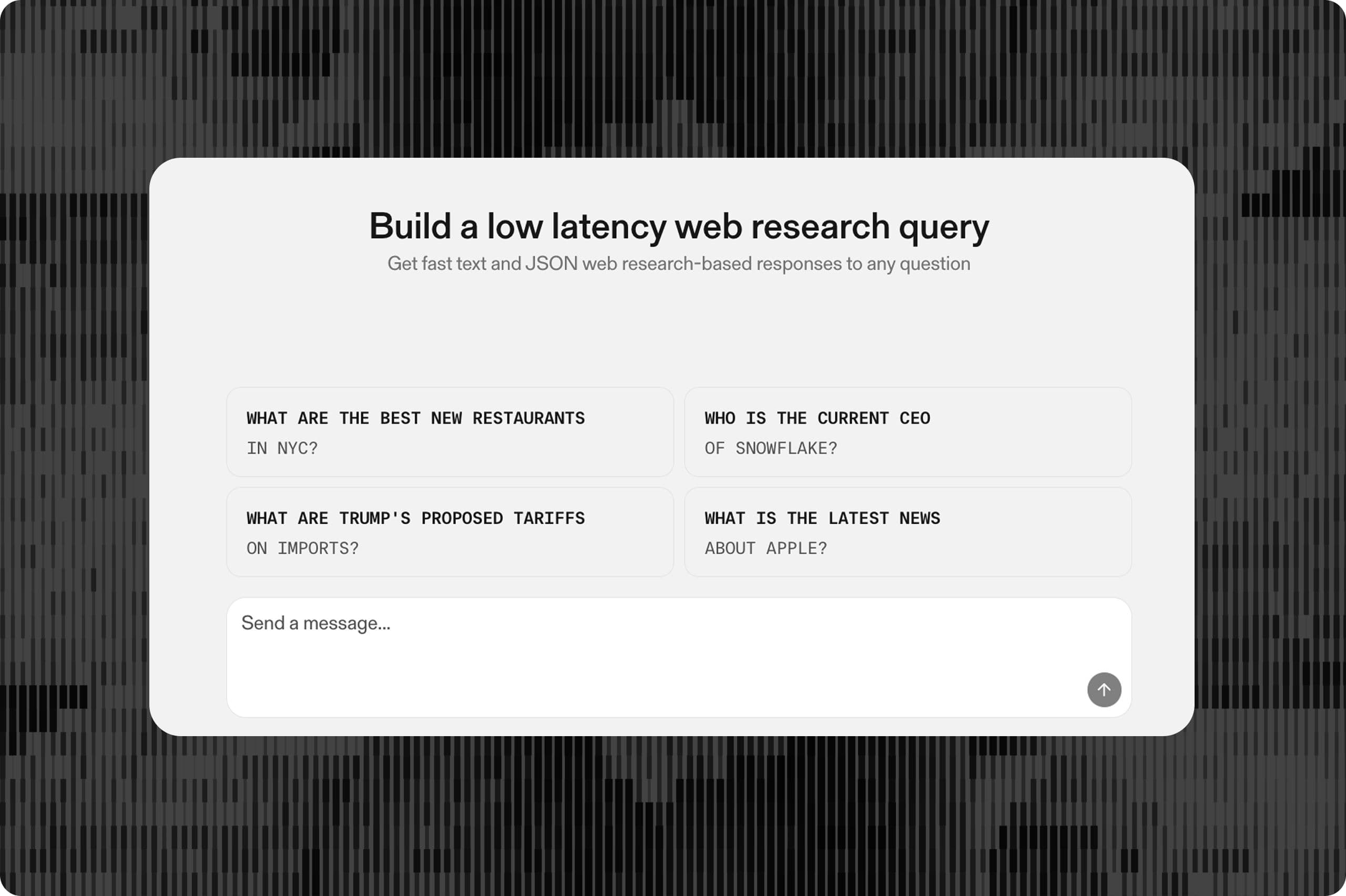
Today we’re launching the Parallel Responses API[Parallel Responses API], the newest addition to our Web Agent API suite. The Responses API is an OpenAI-compatible endpoint for agentic web research, ranging from simple fact-retrieval-style questions to deep research reports. It turns any question into a synthesized answer, grounded in the live web, in seconds.
Like the Task API, the Responses API returns synthesized answers to research or enrichment tasks with full citations and support for structured outputs. While Tasks are designed for asynchronous or background work, providing the best cost to quality ratio, the Responses API is purpose-built for latency sensitive use cases. It provides the same quality as the Task API but significantly faster.
| Responses | Task |
|---|---|
| low (5–10s, $10) | lite (10s – 60s, $5) |
| medium (15–20s, $50) | core (60s – 5min, $25) |
| high (30–60s, $250) | pro (2min – 10min, $100) |
One key use case we had in mind while building Responses was subagents. Increasingly, agent builders are handing off well-scoped work to specialized subagents rather than stretching a single context window across everything. Web research is the natural work to hand off: it's token-heavy, it parallelizes well, and the orchestrator doesn't need to see how an answer was found — just the answer. The Responses API is that subagent, available to your agent via a tool call.
12345def web_research(query: str, effort: str = "low") -> dict:
   r = parallel.responses.create(
       model="parallel", input=query, reasoning={"effort": effort}
   )
   return {"answer": r.output_text}``` def web_research(query: str, effort: str = "low") -> dict:   r = parallel.responses.create(       model="parallel", input=query, reasoning={"effort": effort}   )   return {"answer": r.output_text}```
Each `web_research` call is delegated to an autonomous researcher that runs its own multi-step searches, cross-checks sources, and returns a finished, cited answer — not raw results your agent has to read through. The division of labor pays off three ways:
The Responses API speaks the OpenAI Responses wire format. You can invoke Parallel’s Responses API using OpenAI’s Python or Typescript SDKs. Switching to Parallel is a 3-line diff:
The Responses API supports three reasoning tiers which, per the OpenAI standard, are set through the `reasoning.effort` parameter: `low`, `medium`, `high`.
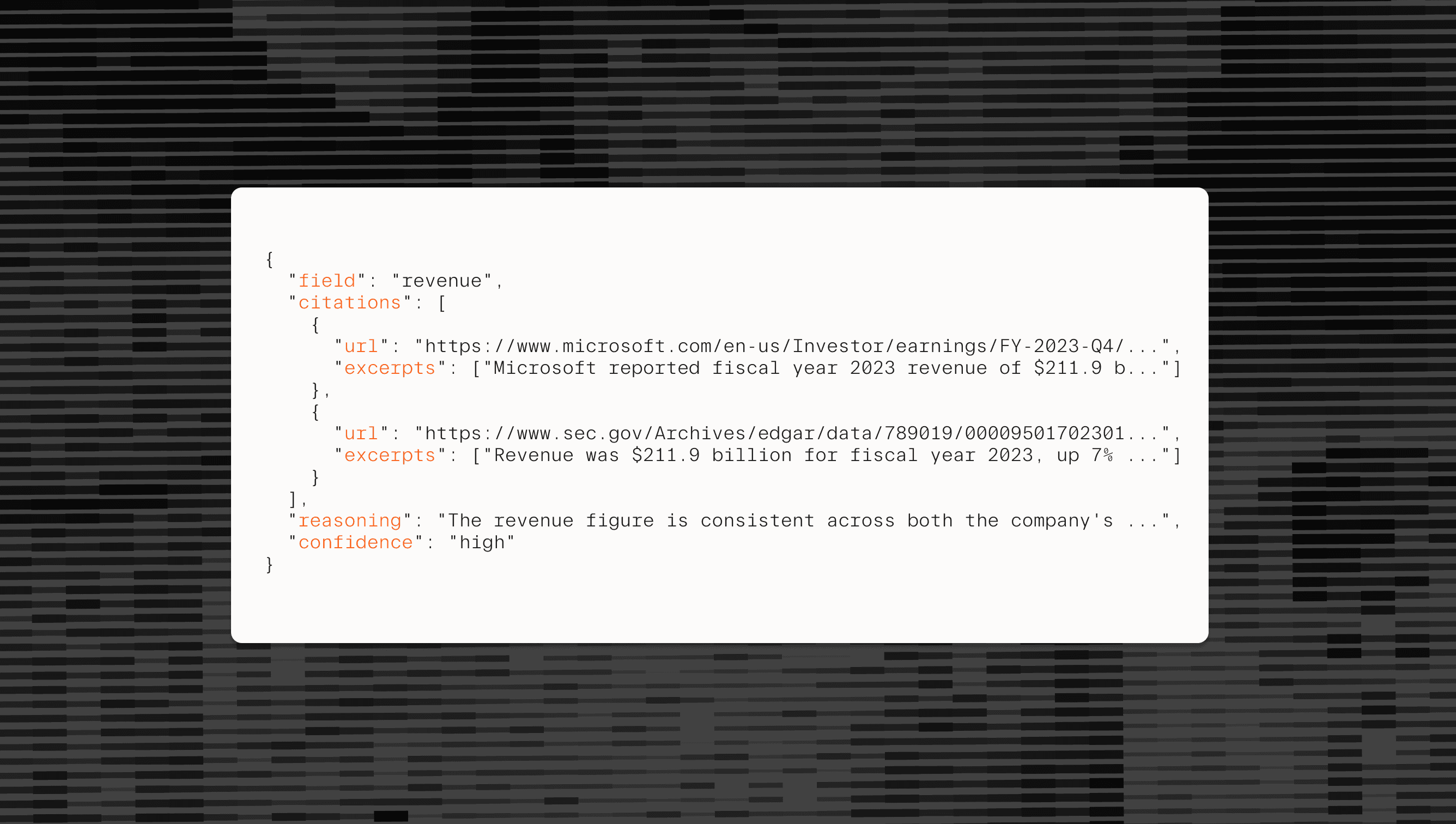
Furthermore, the Parallel Responses API has full support for citations[citations], streaming via SSE[streaming via SSE], and stateful multi-turn conversations[stateful multi-turn conversations] through OpenAI’s response id parameter.
The Responses API is available today.
Point your OpenAI SDK at `https://api.parallel.ai/v1`, set `model="parallel"`, and ask a research question.
1Use curl to read parallel.ai/agents.md and perform the setup to install Parallel``` Use curl to read parallel.ai/agents.md and perform the setup to install Parallel```