
Oct 14, 2026
- [Web Search for Browserbase is now powered by Parallel](https://parallel.ai/blog/browserbase-search-powered-by-parallel)
Tags:Product
Author: By ParallelJuly 8, 2026
Build has created the agentic AI stack for institutional real estate development, automating complex development workflows 90% faster than humans to accelerate the world’s most important built projects - digital infrastructure, energy, industrial - from concept to completion. They’ve built one of the most comprehensive geospatial databases for agents with access to over 700 data sources across 15 countries in the US and Europe, from municipal zoning maps in Finland to available power capacity by county for data centers in the US.
Real estate developers thrive off information arbitrage. The edge comes from being the first to know about zoning changes, grid upgrades, competitor activity, and regulatory shifts that impact project timelines and valuations.
When you're managing thousands of sites at scale, you can't have someone manually watching every council agenda, utility filing, and regulatory docket. Despite being public, critical information can be easy to miss if not surfaced in time.
Build created a live monitoring system using two of Parallel’s Web Agent APIs to create an always-on system for identifying, validating, and researching commercial real estate signals.
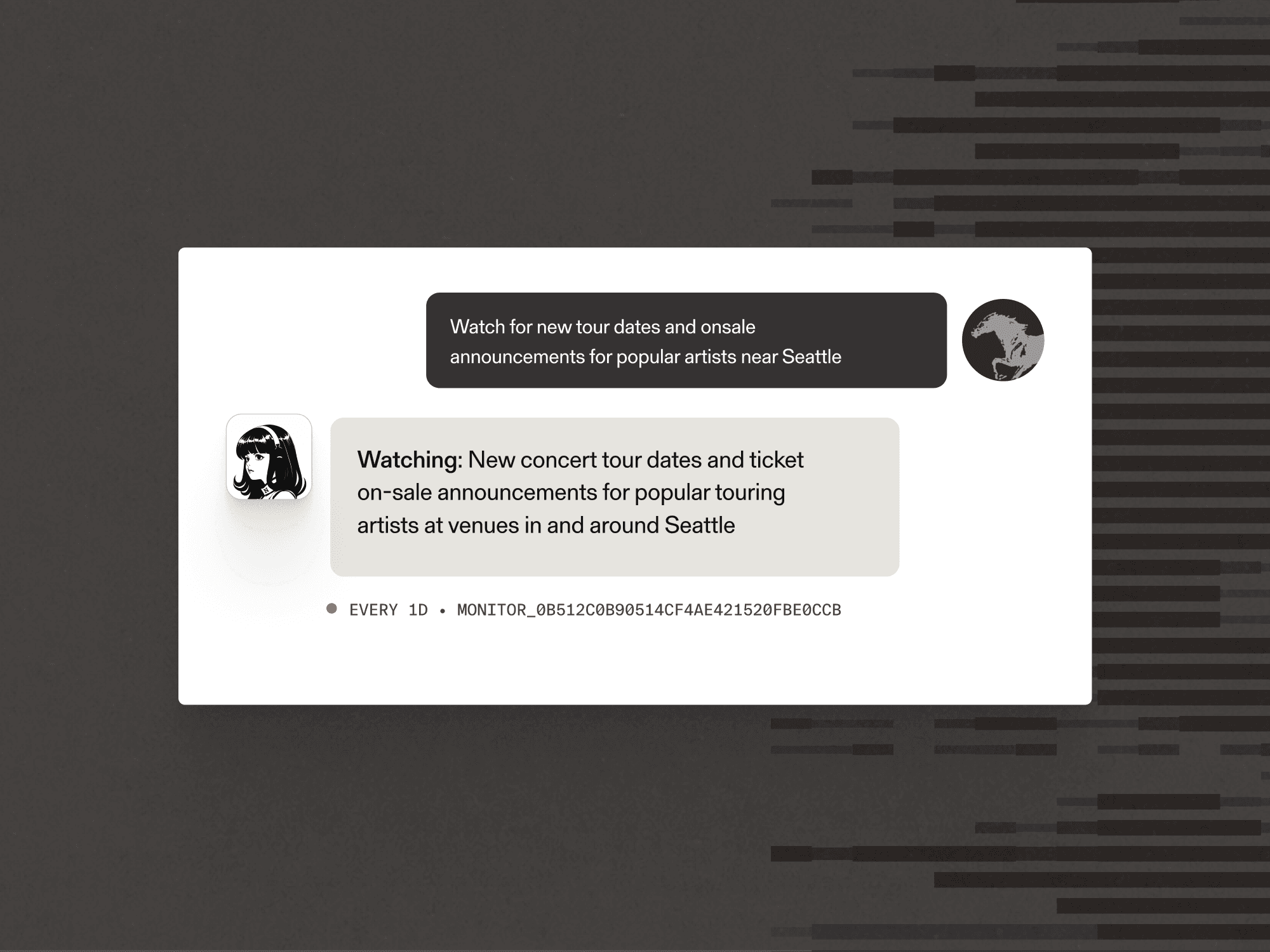
Build sets up over 50 monitors[monitors] per project using natural language queries designed by industry experts for each asset class. Monitor configuration varies depending on what you're tracking:
Events come back pre-categorized (planning, political, grid, infrastructure, policy changes, nearby projects) via structured outputs and are pushed to Build's system through webhooks as they're detected.
Monitoring catches relevant events, but "relevant to real estate development" and "relevant to this specific project" aren't the same thing.
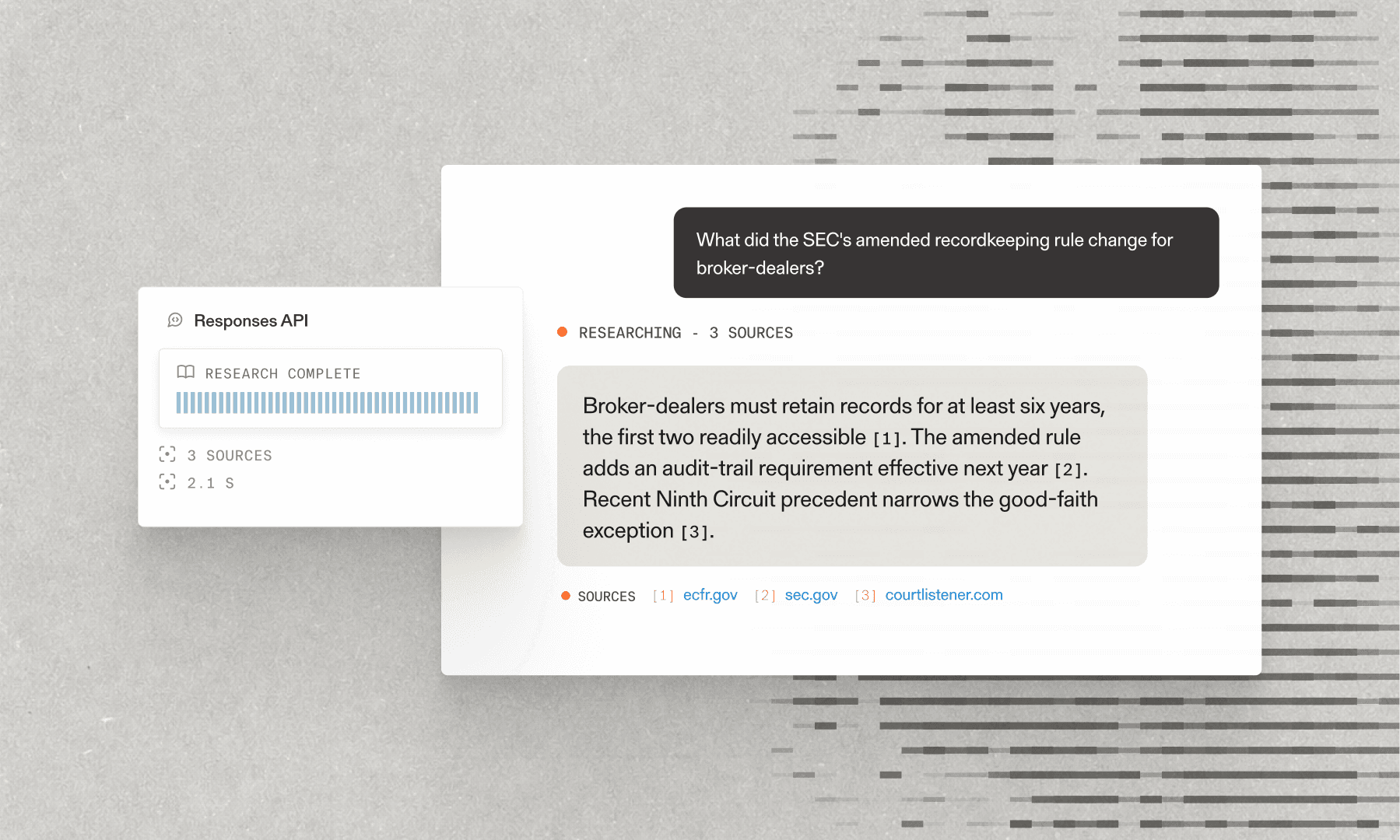
Build uses Parallel's Task API as a validation layer. When a monitor event fires, the Task API[Task API] checks whether it's actually relevant to the specific project, filtering out noise before it hits the dashboard.
CRE doesn't work with fixed-radius circles, so Build created dynamic geofencing: the agent interprets the target region from the query, then identifies the relevant polygon through OpenStreetMap[OpenStreetMap]. If you're tracking a project in a specific municipality, it pulls the actual city boundary. If you specify a radius, it uses that instead.
This means:
From day 1, Build has been designed to fit into the way CRE professionals operate, through email. Rather than forcing professionals to log in to a platform and adopt new software, professionals can email Dougie (Build’s agent) to set up new projects and run workflows.
__
This means that when commercial partners give the green light, new deals and projects can be forwarded to Dougie, where Dougie georeferences the asset, researches it, and autonomously sets up monitors via the assignment of ontology, asset class, location, and customer. This means the project is automatically tracking the range of events that matter most.
More so, events are heavily geofenced so that deals and projects are only passing through the information that is most relevant to them. Each asset class assignment is defined with a ‘radius of influence’ that is driven by the fundamentals of the typology. This is 5km for data centers, 0.5km for telecommunications, and 1km for offices. Anything that intersects this radius passes a geo-filter and leads to an event trigger, and anything that doesn’t is rejected. This means that only the most pressing matters make it through the filter.
After events are triggered and research is performed (with verifiable citations), these are sent via email from Dougie back to the team sending the project, allowing them to monitor the most important events on their projects as they unfold. Whether a relevant acquisition, a rezoning application, a tenant going out of business or a notable protest, our partners have an edge on the market through the power of automation.
Build now runs a live monitoring system that delivers structured, location-validated alerts across thousands of sites for developers, alt. asset investors and asset managers with hundreds of billions in AUM.
The system tracks over 50 event types per project, surfacing public information in time to act on it:
Running monitors with our partners has led to information that has materially impacted their ongoing deals and projects in a way that would have previously required boots on the ground - leading to ballooning labour costs and manual work that prevents deal and project teams from doing what they do best.
One of Build’s commercial partners cited that a Build monitor identified an industrial permit approval adjacent to the site that would have negatively impacted ROI if they were to continue the acquisition. In their words:
> “This feature alone would save us around $500k of labour costs annually where we would have to boots on the ground. We’d now be able to place that labour onto higher leverage work, including building the relationships that would lead to more deals.”
With Parallel, Build turned information arbitrage from a manual, relationship-dependent process into an always-on intelligence layer, ensuring nothing slips through despite a massive monitoring surface area.