Oct 29, 2026
- [Introducing Parallel in Slack: web intelligence where your team works](https://parallel.ai/blog/parallel-slack-agent)
Tags:Product
Author: By ParallelNovember 1, 2026
A benchmark of 300 decision questions whose answers depend on the live web.


Today we’re open-sourcing PWS-Decisions, a benchmark of 300 questions whose answers depend on the live web. On PWS-Decisions, the Parallel Decisions API [Parallel Decisions API ]outscores the closest competitor by 1.5X.
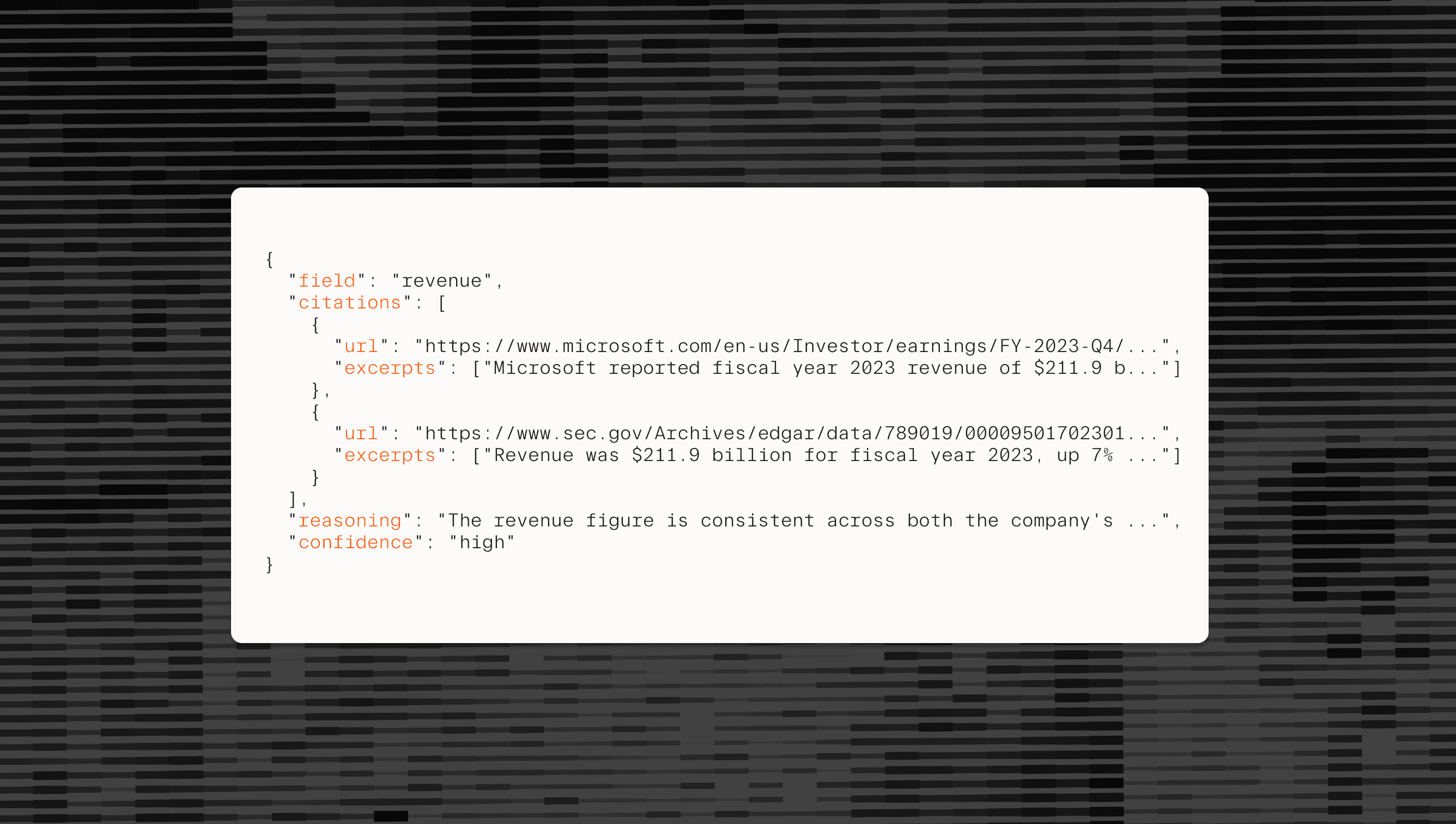
Every day, businesses answer thousands of small classification questions about the world: _Does this vendor support SSO? Is this the same company we already have in the CRM?_ _Is this lead a fit? _The Parallel Decisions API[Parallel Decisions API] is the fastest way to act on that information: it checks the live web and returns a typed, cited answer in under a second, for a tenth of a cent.
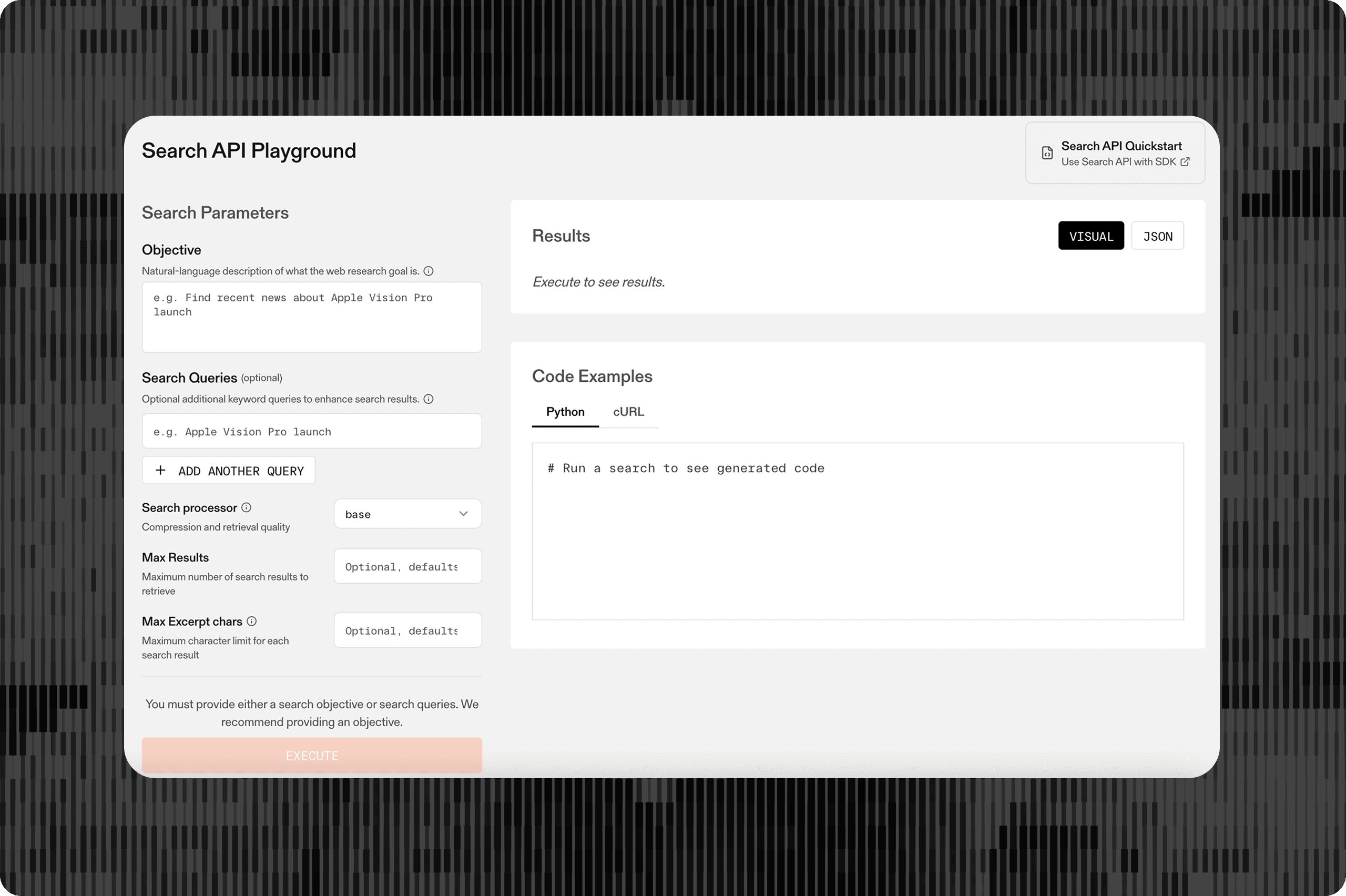
Run the benchmark on your own model with the code on GitHub[GitHub] and the dataset on Hugging Face[Hugging Face], or try the Decisions API free in the playground[playground] with 5,000 free requests.
In our post a couple weeks ago[our post a couple weeks ago], we benchmarked System One models on real, human-labeled tasks from our own production pipelines instead of public leaderboards. Traditional decision benchmarks check what is already in the prompt from a system-one model, not whether an answer is grounded in live web data, so we built PWS-Decisions to test that.
PWS-Decisions is 300 closed-ended questions modeled on the decisions developers use the Decisions API for: qualifying accounts, checking product capabilities, confirming policy rules and tracking fast-moving events. Every question depends on facts that are current, niche, or scattered across the web. Each answer is confirmed by independent web research and a direct source, and every system is scored by exact match under the same rules.
Run PWS-Decisions on any decision model, including your own.
Benchmarks like JevBench can’t tell you how a model will perform when the answer depends on the live web. Which is why traditional models like OpenAI Decisions and Jev do far worse on PWS-Decisions than on a generic decisions benchmark like JevBench. OpenAI Decisions scores 2.2x lower (41.7% vs. 90.0%), and Jev scores 2.6x lower (33.4% vs. 88.3%).
| Benchmark | What it tests | Parallel Decisions | OpenAI Decisions | TypeSafe Jev |
|---|---|---|---|---|
| PWS-Decisions (300 questions) | Questions whose answers depend on current web facts | 78% | 41.7% | 33.4% |
| JevBench (231 questions) | Classic decision tasks answerable from the input | 89.6% | 90.0% | 88.3% |
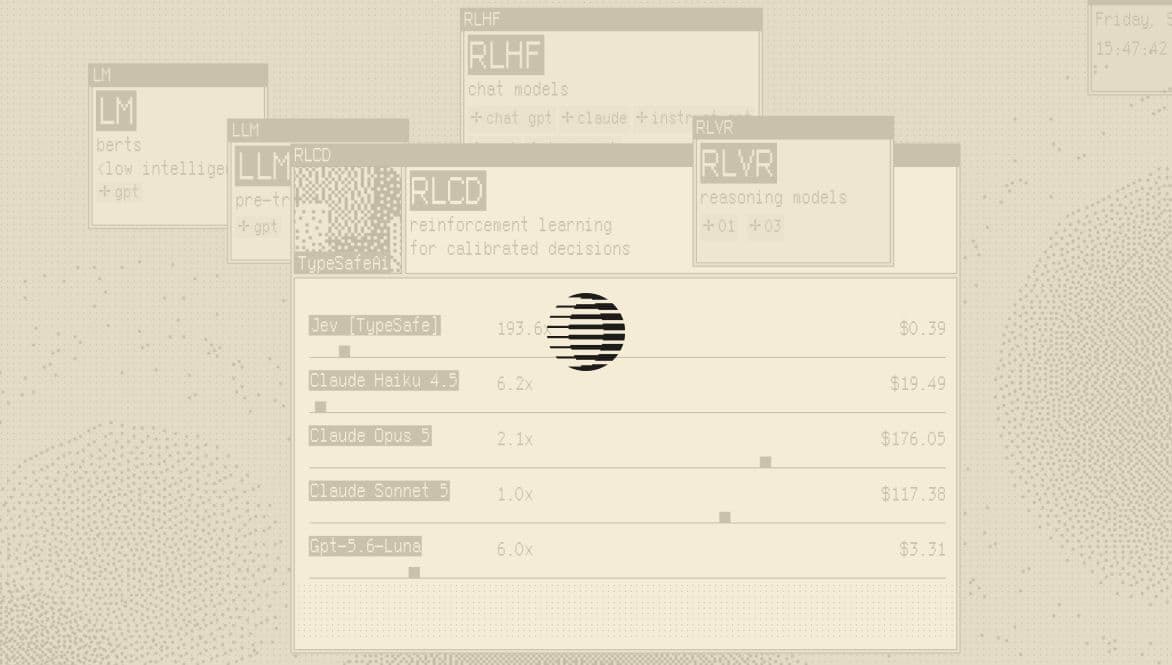
The way you measure cost is critical in determining what the true cost efficiency is. A low-cost model plus a separate search call ends up costing more than one Decisions API call, which includes both. For 1,000 requests that answer closed-ended questions about one entity using current web evidence:
For scale: See some of the examples from our Decisions API launch demos including: rechecking 426 public companies for KYB changes cost $0.85[rechecking 426 public companies for KYB changes cost $0.85], and routing 500 inbound leads cost about $0.50[routing 500 inbound leads cost about $0.50].
Many search requests are really decisions: one value for a spreadsheet cell, a form field or an agent’s next step.
Use the Decisions API when:
There are many different usecases where Decisions API can be useful.
| Use case | What it does | Example question |
|---|---|---|
| Fact-checking | Checks a claim against current sources, in any language | Did this supplier get ISO 27001 certification this year, as its German press release claims? |
| Content moderation | Screens every new listing before it goes live | Does this seller listing impersonate a known brand? |
| Vendor validation | Confirms vendor meets your security requirements, using the latest information | Does this vendor support SAML SSO and EU data residency? |
| Entity matching | Decides whether two CRM records are from the same company, a subsidiary, or unrelated. | Are “Acme Robotics Inc.” and “Acme Robotics GmbH” the same company? |
| Lead qualification | Scores accounts on hiring activity, funding stage and fit. | How many roles is this firm hiring for: none, 1–4, 5–19, or 20+? |
Not sure where the Decisions API fits for your team? Try this demo: [Try this demo: ]enter your company and see which of your workflows could run on web-grounded decisions.
The Decisions API works best when you need a quick, typed answer (yes/no, a choice, or a score) to a question that depends on what’s happening on the web right now. For everything else, another Parallel API may serve you better.
| Use case | Returns | When to use it over Decisions API |
|---|---|---|
| Search | Ranked pages, and LLM-ready excerpts | When you want the evidence itself and will reason over it with your own model |
| Extract | Clean markdown from a URL, including JavaScript pages and PDFs | When you need a page’s full contents, not one fact from it |
| Response | A researched, open-ended answer to one question | When the answer is a sentence or paragraph, not a fixed option |
| Task | Cited, structured research that runs from seconds to hours | When the question needs multi-step research that one search can’t cover or open-ended fields |
| FindAll | A verified list of entities that match your criteria | When you need to find the records first, rather than decide about ones you already have |
| Monitor | Alerts when something changes | When you want to know the moment an answer changes, instead of re-checking on a schedule |
Run PWS-Decisions on your own model with the code on GitHub[GitHub] and the data on Hugging Face[Hugging Face]. Then try the Decisions API with 5,000 free requests in the playground[playground], or jump into the docs[docs]. Agents can use it free as the `web_decisions` tool in the Parallel MCP server. Running decisions at scale? Talk to us[Talk to us] about building an eval set from your own traffic.