
September 8, 2026
# RAG (Retrieval-Augmented Generation)
Retrieval-augmented generation (RAG) is a technique that connects a language model to an external knowledge source and grounds answers in facts retrieved at query time.
## What is RAG?
A RAG system pairs an information retrieval step with a generative large language model (LLM), so its answers stay grounded in external data. A standard LLM can't reach past its training data, so the system fetches current, relevant information first and hands it to the model as context.
Researchers introduced the term in the 2020 paper that coined RAG[the 2020 paper that coined RAG], where they defined it as combining pre-trained parametric and non-parametric memory for language generation.
## Key characteristics
- - **Two steps:** The technique first retrieves external data, then uses the LLM to generate an answer grounded in that context.
- - **Fresh information:** It reaches past the model's training cutoff to pull current sources at query time.
- - **Fewer hallucinations:** Grounding answers in retrieved facts cuts made-up output, which helps reduce LLM hallucinations[reduce LLM hallucinations]; as IBM notes[as IBM notes], RAG can't make a model error-proof.
- - **Source attribution:** These systems return passages with source URLs, so users can cite where each fact came from.
- - **Varied retrieval methods:** The system can draw from a static vector database or from live web search, depending on the freshness you need.
## Example
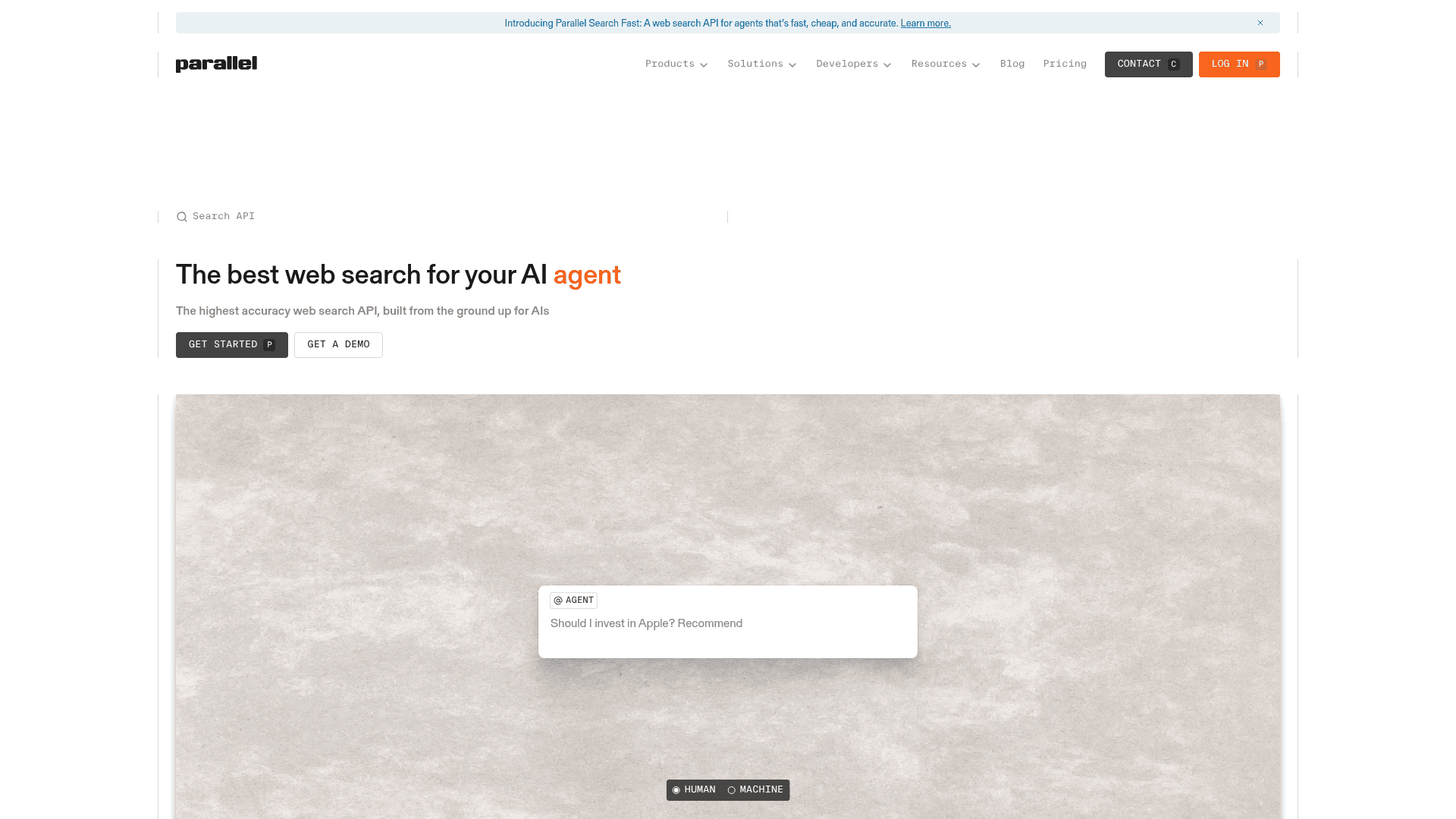
Picture a customer support chatbot built as an AI agent. When a user asks a question, the agent searches a live knowledge source at query time and answers from the retrieved excerpts. Teams often use Parallel's Search API[Parallel's Search API] as that retrieval layer.
Demand for this pattern keeps climbing. Databricks reports that vector databases supporting retrieval augmented generation (RAG) applications grew 377% year over year[grew 377% year over year].
_Parallel's Search API[Search API] returns ranked, source-linked excerpts an LLM can use as retrieval context._
## Related terms
- - semantic search[semantic search]: how vector based retrieval finds passages by meaning.
- - web search API[web search API]: one way RAG retrieves current context at query time.
- - AI agents[AI agents]: systems that rely on RAG to ground their decisions.
- - deep research[deep research]: extends retrieval across many sources beyond a single lookup.
## FAQ
**How is RAG different from a standard LLM?**
A standard LLM answers from its training data alone. It retrieves external, current facts and grounds its answer in them.
**Does RAG stop AI hallucinations?**
It reduces them by grounding output in retrieved sources, though it doesn't eliminate them.
**What is the difference between RAG and fine-tuning?**
Fine-tuning retrains the model's weights on new data. RAG leaves the model unchanged and supplies relevant facts at query time.