
Nov 5, 2026
- [Introducing Parallel MCP 2.0: all-in-one web research tools for every agent](https://parallel.ai/blog/parallel-mcp-2)
Tags:Product
Author: By ParallelNovember 1, 2026
A benchmark of 300 decision questions whose answers depend on the live web.


Today we’re open-sourcing PWS-Decisions, a benchmark of 300 questions whose answers depend on the live web. On PWS-Decisions, the Parallel Decisions API [Parallel Decisions API ]outscores the closest competitor by 1.5X.
Every day, businesses answer thousands of small classification questions about the world: _Does this vendor support SSO? Is this the same company we already have in the CRM?_ _Is this lead a fit? _The Parallel Decisions API[Parallel Decisions API] is the fastest way to act on that information: it checks the live web and returns a typed, cited answer in under a second, for a tenth of a cent.
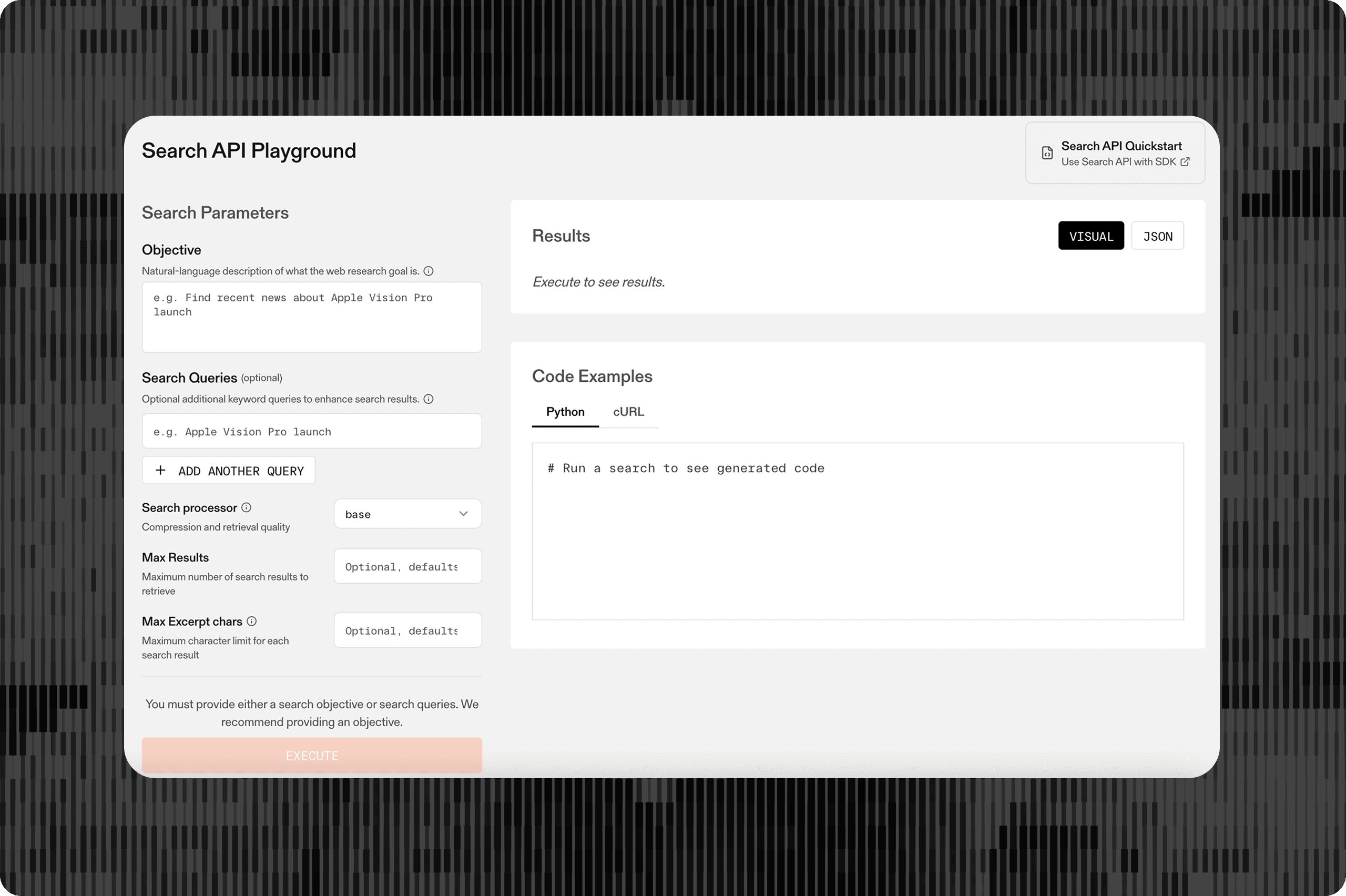
Run the benchmark on your own model with the code on GitHub[GitHub] and the dataset on Hugging Face[Hugging Face], or try the Decisions API free in the playground[playground] with 5,000 free requests.
In our post a couple weeks ago[our post a couple weeks ago], we benchmarked System One models on real, human-labeled tasks from our own production pipelines instead of public leaderboards. Traditional decision benchmarks check what is already in the prompt from a system-one model, not whether an answer is grounded in live web data, so we built PWS-Decisions to test that.
PWS-Decisions is 300 closed-ended questions modeled on the decisions developers use the Decisions API for: qualifying accounts, checking product capabilities, confirming policy rules and tracking fast-moving events. Every question depends on facts that are current, niche, or scattered across the web. Each answer is confirmed by independent web research and a direct source, and every system is scored by exact match under the same rules.
Run PWS-Decisions on any decision model, including your own.
Benchmarks like JevBench can’t tell you how a model will perform when the answer depends on the live web. Which is why traditional models like OpenAI Decisions and Jev do far worse on PWS-Decisions than on a generic decisions benchmark like JevBench. OpenAI Decisions scores 2.2x lower (41.7% vs. 90.0%), and Jev scores 2.6x lower (33.4% vs. 88.3%).
| Benchmark | What it tests | Parallel Decisions | OpenAI Decisions | TypeSafe Jev |
|---|---|---|---|---|
| PWS-Decisions (300 questions) | Questions whose answers depend on current web facts | 76.2% | 41.7% | 33.4% |
| JevBench (231 questions) | Classic decision tasks answerable from the input | 89.6% | 90.0% | 88.3% |
The way you measure cost is critical in determining what the true cost efficiency is. A low-cost model plus a separate search call ends up costing more than one Decisions API call, which includes both. For 1,000 requests that answer closed-ended questions about one entity using current web evidence:
For scale: See some of the examples from our Decisions API launch demos including: rechecking 426 public companies for KYB changes cost $0.85[rechecking 426 public companies for KYB changes cost $0.85], and routing 500 inbound leads cost about $0.50[routing 500 inbound leads cost about $0.50].
Many search requests are really decisions: one value for a spreadsheet cell, a form field or an agent’s next step.
Use the Decisions API when:
There are many different usecases where Decisions API can be useful.
| Use case | What it does | Example question |
|---|---|---|
| Fact-checking | Checks a claim against current sources, in any language | Did this supplier get ISO 27001 certification this year, as its German press release claims? |
| Content moderation | Screens every new listing before it goes live | Does this seller listing impersonate a known brand? |
| Vendor validation | Confirms vendor meets your security requirements, using the latest information | Does this vendor support SAML SSO and EU data residency? |
| Entity matching | Decides whether two CRM records are from the same company, a subsidiary, or unrelated. | Are “Acme Robotics Inc.” and “Acme Robotics GmbH” the same company? |
| Lead qualification | Scores accounts on hiring activity, funding stage and fit. | How many roles is this firm hiring for: none, 1–4, 5–19, or 20+? |
Not sure where the Decisions API fits for your team? Try this demo: [Try this demo: ]enter your company and see which of your workflows could run on web-grounded decisions.
The Decisions API works best when you need a quick, typed answer (yes/no, a choice, or a score) to a question that depends on what’s happening on the web right now. For everything else, another Parallel API may serve you better.
| Use case | Returns | When to use it over Decisions API |
|---|---|---|
| Search | Ranked pages, and LLM-ready excerpts | When you want the evidence itself and will reason over it with your own model |
| Extract | Clean markdown from a URL, including JavaScript pages and PDFs | When you need a page’s full contents, not one fact from it |
| Response | A researched, open-ended answer to one question | When the answer is a sentence or paragraph, not a fixed option |
| Task | Cited, structured research that runs from seconds to hours | When the question needs multi-step research that one search can’t cover or open-ended fields |
| FindAll | A verified list of entities that match your criteria | When you need to find the records first, rather than decide about ones you already have |
| Monitor | Alerts when something changes | When you want to know the moment an answer changes, instead of re-checking on a schedule |
Run PWS-Decisions on your own model with the code on GitHub[GitHub] and the data on Hugging Face[Hugging Face]. Then try the Decisions API with 5,000 free requests in the playground[playground], or jump into the docs[docs]. Agents can use it free as the `web_decisions` tool in the Parallel MCP server. Running decisions at scale? Talk to us[Talk to us] about building an eval set from your own traffic.
Nov 5, 2026
Oct 29, 2026

Oct 29, 2026

Oct 27, 2026
Oct 25, 2026

Oct 22, 2026

Oct 22, 2026

Oct 20, 2026

Oct 14, 2026

Oct 14, 2026
Oct 13, 2026

Sep 28, 2026

Sep 28, 2026

Sep 28, 2026

Sep 24, 2026
Sep 23, 2026
Sep 18, 2026
Sep 15, 2026

Sep 10, 2026

Aug 31, 2026

Aug 29, 2026

Aug 25, 2026

Aug 21, 2026
Aug 19, 2026
Aug 13, 2026
Jul 30, 2026
Jul 21, 2026

Jul 20, 2026

Jul 16, 2026

Jul 15, 2026

Jul 13, 2026

Jul 12, 2026
Jul 10, 2026

Jul 8, 2026

Jun 9, 2026

Jun 5, 2026

Jun 4, 2026

May 20, 2026
May 19, 2026

May 7, 2026

May 5, 2026

Apr 29, 2026
Apr 29, 2026

Apr 24, 2026

Apr 23, 2026

Apr 21, 2026

Apr 20, 2026

Apr 8, 2026

Apr 8, 2026
Apr 7, 2026

Mar 30, 2026

Mar 25, 2026
Mar 19, 2026

Mar 18, 2026

Mar 17, 2026

Mar 10, 2026

Mar 4, 2026

Mar 2, 2026

Feb 23, 2026

Feb 4, 2026
Jan 28, 2026

Jan 21, 2026

Jan 15, 2026

Jan 8, 2026
Dec 17, 2025

Dec 16, 2025

Dec 11, 2025
Dec 10, 2025
Nov 20, 2025
Nov 18, 2025
Nov 13, 2025

Nov 12, 2025

Nov 11, 2025
Nov 6, 2025
Nov 3, 2025
Oct 30, 2025

Oct 23, 2025

Oct 22, 2025

Oct 17, 2025

Oct 16, 2025

Oct 9, 2025

Oct 8, 2025

Oct 7, 2025

Oct 6, 2025

Sep 30, 2025

Sep 16, 2025

Sep 12, 2025

Sep 11, 2025
Sep 9, 2025

Sep 5, 2025

Aug 21, 2025

Aug 14, 2025

Aug 7, 2025
Aug 5, 2025

Aug 4, 2025

Jul 31, 2025

Jul 31, 2025
Jul 28, 2025

Jul 8, 2025

Jul 2, 2025

Jun 17, 2025
Jun 10, 2025
May 30, 2025
May 16, 2025

Apr 24, 2025